




















Game News

Hint Crafted Tetris: Sharp Block Tactics
Game Introduction Tetris Hint is an incredibly engaging casual game where falling blocks constantly test your strategic thinking and quick reflexes! You need to precisely place the blocks into empty spaces, and once a full line is completed, it will be cleared, allowing you to easily accumulate points. If you can clear multiple lines in a row, you'll trigger combos—go ahead and aim for a high score!Drawing inspiration from the classic Tetris, this game retains the timeless essence of the gameplay while boasting vibrant graphics and captivating animations. Suitable for players of all ages, it delivers a fun and exciting experience every time you play. Get ready to show off your skills and have a great time! Game Features 1 Fun casual gameplay Centered around falling blocks, with simple and easy-to-learn operations, perfect for fragmented time experiences, allowing people to easily immerse themselves. 2 Tests comprehensive abilities Requires both formulating reasonable block placement strategies and having quick reaction skills to cope with ever-changing situations. 3 Motivating scoring mechanism Accumulate points by completing full lines for elimination, and consecutive elimination of multiple lines can trigger combos, providing motivation to strive for high scores. 4 Combination of classics and innovation Continues the timeless gameplay of the classic Tetris, while integrating gorgeous graphics and charming animations to bring a fresh experience. 5 Widely adaptable scenarios Regardless of age, one can find fun in it, and each experience can bring a relaxed and pleasant feeling. Gameplay and Controls I. Basic Placement At the start of the game, a hint area with white blocks will appear. Tap this area to place the colored blocks from the “Next” column on the left into corresponding positions, filling them according to the shape match. II. Rotation Adjustment If the shape of a block doesn’t fit, tap the button with the rotation arrow on the left to rotate the colored block. Find the form that best matches the hint position, and then place it in the main area. III. Scoring Rules When a horizontal row of colored blocks is completely filled (with no gaps), that row will be eliminated, and you’ll score points (displayed at “score” on the top of the interface). Eliminating multiple rows in a row triggers a combo, and the scores accumulate more substantially. IV. Game Over and Restart If blocks pile up to the top and effective placement is no longer possible, “GAME OVER” will be triggered. At this point, you can tap the restart arrow button on the interface to start the game again and challenge for a higher score. Game Guide 1. Master Block Rotation -Understand Rotation Mechanics Make full use of the rotation button. Regularly rotate blocks to find the optimal shape for the current gap in the play area. For example, if there's a T - shaped space, rotate the corresponding block (like a square or L - shaped block) to fit precisely. This helps in filling rows more efficiently and avoiding block堆积. 2. Plan Ahead with “Next” Blocks -Anticipate Placement Always check the “Next” column on the left. By predicting the upcoming blocks, you can plan your current block placements to create continuous empty spaces that can accommodate the next blocks. If the next block is a long vertical one, try to reserve a vertical slot in advance. 3. Prioritize Row Completion -Focus on Full Rows Aim to complete horizontal rows as quickly as possible. A single full row elimination gives you points, but consecutive row eliminations (combos) multiply your score. When you see a nearly full row, use the appropriate block (considering its shape and rotation) to fill the last few gaps and trigger the elimination. 4. Create and Utilize Open Spaces -Build Vertical and Horizontal Gaps Don't just fill rows blindly. Create strategic gaps, both vertical and horizontal. Vertical gaps can be used for long, straight blocks, while horizontal gaps are perfect for square or T - shaped blocks. These gaps allow for more flexibility in placing upcoming blocks and can lead to more combo opportunities. 5. Manage Block Stacking -Avoid Top - Heavy Stacks Keep an eye on the height of your block stacks. Try to distribute blocks evenly across the play area. If one side starts to stack up too high, use blocks to fill the lower rows on that side to balance it out. A top - heavy stack can quickly lead to a “GAME OVER” as new blocks have no space to land. 6. Use Combos for High Scores -Chain Reactions Set up your block placements so that eliminating one row triggers the elimination of another. For example, if you have two almost full rows, place a block that can fill the last gap of the lower row, which might then cause the upper row (already with only one gap) to be filled by the resulting block shift, creating a double elimination combo. The more combos you create, the higher your score will be. 7. Learn from Game Over -Analyze Failures When you get a “GAME OVER”, take a moment to analyze why. Was it because of poor block rotation, not planning for the next block, or letting a stack get too high? Use these failures as learning opportunities to adjust your strategy in the next game and improve your performance.
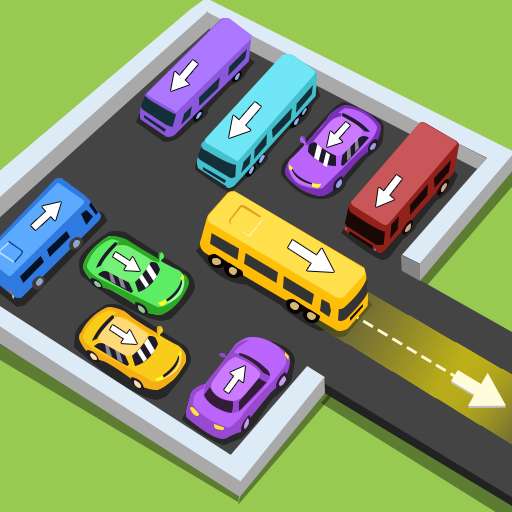
Hop Through Traffic: Jam to Jam On the Go
Game Introduction In the world of Traffic Jam Hop On, an exciting battle of strategy and reflexes awaits you! Step into this colorful parking lot, and you'll find every inch filled with challenges—various vehicles are stuck in a gridlock, unable to move an inch. Your mission is to become a traffic clearing master you need to use careful strategies to plan each move, finding the optimal path through the intricate maze of cars; at the same time, you must rely on lightning-fast reflexes to seize fleeting opportunities, allowing each stranded vehicle to break free one by one. The moment you watch the cars smoothly drive out under your command, transforming from congestion to smooth flow, it will surely bring a great sense of accomplishment. This is not only a brain-teasing puzzle journey but also a fun challenge that will immerse you. Are you ready to start your clearing journey? Game Features A Dual Test of Strategy and Reflexes The game perfectly combines strategic planning with quick reflexes. It requires calm analysis of the vehicle formation layout to conceive the optimal path for vehicle movement, and also demands sharp reflexes to seize operational opportunities in the ever-changing traffic gridlock. Every decision is crucial to successfully breaking through the congestion. Immersive Colorful Parking Lot Scenes Set in a brightly colored parking lot, various vehicles have vivid and interesting designs. Rich visual elements create an atmosphere that feels like being in a real traffic scene, making the puzzle-solving process accompanied by a pleasant and lively visual experience. Progressive Puzzle Challenges As the levels progress, the congestion in the parking lot gradually intensifies, and the types and layouts of vehicles become more complex. From simple encirclement by a few cars to multi-lane serial blockages, the increasing difficulty continues to stimulate the desire for exploration, bringing a full sense of accomplishment in the process of overcoming difficulties. Intuitive and Easy-to-Understand Operation Logic Despite the numerous challenges, the game's operations are simple and intuitive. It allows for quick mastery of vehicle movement rules, focusing on the competition of strategic thinking and reaction speed without being distracted by complex operations, thus easily immersing in the fun of puzzle-solving. Gameplay and Controls 1. Basic Rule Cars only move in the direction their arrows point. Tap a car – if its path is clear of other vehicles, it’ll drive along that arrow. Your goal is to get cars moving, pick up matching - colored passengers, and clear the parking lot. 2. Operation Process - Check Arrows First Look at each car’s arrow to know where it can go. A yellow car with an upward arrow, for example, tries to move up. - Tap to Move Hit a car. If nothing blocks its path, it moves; if blocked, free the path first (move the blocking cars). Like freeing a red car stuck behind others before moving it. - Unlock Parking Spaces Spots marked “Unlock” up top need specific cars (same - color or qualified) to drive there. Unlocking these helps cars pass or pick up passengers, easing congestion. - Handle Difficulty Surges At levels like “Level 3” (with “Difficulty Surge!”), more cars and trickier layouts appear. Plan move orders carefully – free key paths first (moves that quickly reduce jams) to clear the lot step by step. 3. Win Condition Get all cars moving, match passengers to cars, and clear the parking area. Do this to finish the level and unlock the next! Game Guide I. Basic Ideas 1. Prioritize Key Paths Observe car arrows. Find vehicles that can quickly connect “passenger queues to exits” (e.g., cars whose arrows directly free up multiple vehicles or unlock parking spots). In Level 2, prioritize moving cars with arrows pointing toward exits and few obstacles – they clear space fast. 2. Match Colors for Progress Notice the passenger queue colors at the top. Move matching - colored cars first. If blue passengers are queuing, unblock blue - arrow cars to pick them up and leave. This reduces congestion AND unlocks color - specific “Unlock” spots, speeding up level completion. II. Stage - by - Stage Tips #(1) Early Levels (Level 1 - 2) 1. Simple Layouts (Single Lanes) In Level 1 (few cars), tap cars one by one to test movement. Follow “short paths first, long paths later” – move small cars (e.g., yellow single - arrow cars) with clear paths to empty small areas, then handle others. 2. Use “Unlock” Spots In Level 2, “Unlock” spots at the top need cars full of matching passengers (cars stacked with their color). Guide these cars to “Unlock” spots – they trigger chain reactions (e.g., clearing a row of temporary blocks), simplifying the layout instantly. #(2) High - Difficulty Levels (Level 3 +) 1. Break Down Multi - Layer Jams For “Difficulty Surge!” layouts, split congestion into small zones (group by color/arrow direction). Start with “isolated” cars (needing 1 - 2 moves to free) to slowly collapse big jams. 2. Predict Chain Moves When moving a car, predict which blocked cars will unlock next. For example, moving a horizontal car might free multiple vertical cars – create a “domino effect” to clear the lot efficiently. III. Handling Special Cases 1. Deadlocks (Cars Blocking Each Other) If arrows trap cars, prioritize those “critical” to queues/exits (e.g., cars with many passengers, near exits). Force space for them. Use bottom buttons (like the pink car icon, possibly resetting a small area) to break the standoff if needed. 2. Speed - Run Details Watch queue numbers (e.g., “Queue 22” – lower numbers = more passengers picked up). Prioritize big cars (longer, carry more people) to drop queue numbers fast. This cuts level time AND triggers “fast - clear” rewards (e.g., hidden spots, faster car movement). Follow this strategy – from basic layouts to complex jams. Dismantle step by step, prioritize key moves, and master traffic - clearing like a pro! Let every level’s cars “find their way” smoothly!
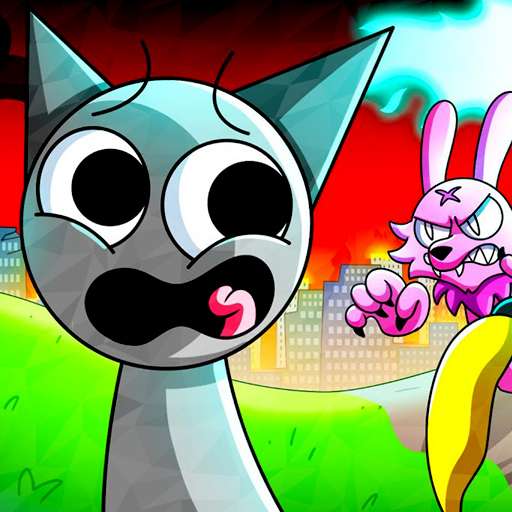
Sprunki Hunt: Monster Adventures Unleashed
Game Introduction Welcome to the wonderful world of Sprunki monsters, where an amazing game - 《Sprunki Memory Match: Monster Hunt Quest》 is waiting for you to experience!In this game, your memory will face a great challenge. The game field is filled with various Sprunki characters, and what you need to do is find pairs of them. Those cute monsters are hidden in different positions, and you have to keep them firmly in mind, then find the corresponding one before time runs out.But be careful, you only have a limited number of steps to use in each level. Come and test your memory, and start this exciting Sprunki adventure! Game Features Memory-testing core gameplay The main task is to find pairs of Sprunki characters on the game field. It is necessary to remember the positions of the hidden monsters, which can effectively exercise memory. Time-limited challenge It is essential to find the matching monsters before time runs out, adding a sense of urgency and excitement to the game. Limited steps per level There is a restriction on the number of steps available in each level, which requires careful planning of moves and adds more difficulty and strategy to the gameplay. Cute Sprunki world The game is set in a wonderful world full of lovely Sprunki monsters, bringing a pleasant and engaging visual experience. Gameplay and Controls Start the game Launch Sprunki Memory Match: Monster Hunt Quest and select a level to begin your memory challenge. Reveal characters Click or tap on any hidden tile on the game field to reveal the Sprunki character underneath. Find pairs After revealing a character, remember its position. Then click or tap another tile to look for the matching Sprunki character. Complete pairs If the two revealed characters are a pair, they will stay uncovered. If not, both tiles will flip back to hidden, and you need to try again. Finish the level Continue finding all pairs of Sprunki characters on the field. You must complete this task before the time runs out and within the limited number of steps provided for the level. Game Guide 1.Preparation before starting a level After entering Sprunki Memory Match: Monster Hunt Quest, first spend 10-15 seconds observing the overall layout of the game field. Pay attention to the arrangement and number of tiles. Primary levels are mostly 4x4 grids, while advanced levels may be 6x6 or more complex layouts. Adjust your device settings to avoid interference. For first-time players, it is recommended to start with lower difficulty levels to get familiar with the rhythm and character features. 2. Tips for efficiently memorizing revealed characters Group memory method: Divide the game field into 2-4 areas, such as splitting a 5x5 grid into upper and lower parts. After revealing a character, mentally mark the area it belongs to, like "the blue long-eared one is in the upper right area," which can narrow down the scope when looking for its pair.Feature association memory: Use the unique features of characters (hairstyles, colors, etc.) to establish a connection with their positions. You can also give them nicknames to aid memory. After revealing a new character, spend 1-2 seconds repeating the association between its features and position.、 3. Reasonable planning of clicking operations Avoid blind clicking: Before clicking, recall the features and positions of the revealed characters, and prioritize areas similar to the features of unpaired characters. If you fail to find a pair twice in a row, pause for 2 seconds to sort out your memory.Control the clicking rhythm: Keep an interval of 1-3 seconds between two clicks. After the first click, spend 1 second remembering the features and position. Before the second click, mentally simulate the possible position of the pair to avoid mixing up positions due to continuous rapid clicking. 4. Strategies for dealing with time and step limits Quick progress in the early stage: The first 30% of the level's duration is crucial for building a memory bank. Click 6-8 tiles in different areas in order. When no pair is found, confirm the position before the tile hides.Precise operation in the later stage: When the remaining time is less than 30% and the remaining steps are less than 20%, prioritize dealing with characters whose pairing positions are clearly remembered, and temporarily give up on characters with vague memories. When only 1-2 pairs are left, use the elimination method to narrow down the range and try. 5. Advanced skill: Building a memory list For advanced levels, you can build a simple "feature + position" memory list in your mind. Add entries when new unpaired characters are revealed, and delete them after completing a pair. This helps clearly track unpaired characters and avoid repeated memory or omissions.Mastering these skills allows you to more calmly cope with levels of various difficulties and efficiently complete all Sprunki character pairing tasks within limited time and steps.

Flip to Master:Gravity Bending Stunt Feats
Game Introduction Ready to step into a thrilling carnival of acrobatics and parkour? In the world of Flip Master, every leap is an extreme challenge—become a street stunt legend, slicing through the sky with stunning flips and conquering all with breath taking aerial moves.Don’t underestimate the obstacles; they’re the touchstones of skill: calculating takeoff angles, adjusting posture mid-air to nail 360° spins, and landing with perfect balance. Every detail tests your reflexes and control. As you master the game, unlock cool stunt combinations, turning flips into creative aerial performances.The game boasts diverse scenes: city rooftop edges, metal frames in abandoned factories, vines in tropical rainforests—each holds unique challenges and surprises. Upgrade your jump power and air time to make flips more explosive, inching closer to the title of "Flip Master".No complicated rules here, just pure action joy: when you string together perfect flips, with wind roaring past and scenes blurrying by, the total immersion makes time vanish—that’s the ultimate paradise Flip Master creates for stunt enthusiasts. Game Features Core Gameplay Focuses on Stunt Flips Centered on precise control, it requires completing actions such as calculating takeoff angles, adjusting mid-air postures (e.g., 360° spins), and landing with balance. Creative stunt combinations are unlocked through consecutive perfect flips, emphasizing operational skills and smooth movements. Diverse Scenes with Hidden Challenges Covers various styles of scenes including urban rooftops, abandoned factories, and tropical rainforests. Each scene is designed with unique obstacles and hidden surprises, enriching the visual experience and increasing gameplay diversity. Clear Skill Growth System Attributes like jump strength and air time can be upgraded to enhance the explosive power and completion of flip actions, helping to gradually improve abilities and advance towards the title of "Flip Master". Immersive and Unrestricted Experience Without complex rule restrictions, it focuses on pure action pleasure. When difficult actions are completed consecutively, a strong sense of immersion can be felt, as if being in a real stunt performance. Gameplay and Controls 1. Jump Preparation At the start of the game, the character stands on the initial high platform. When the prompt “Release to perform the jump” appears in the top - right corner of the screen, long - press the left mouse button to charge up and accumulate energy for the jump. 2. Mid - air Stunts After jumping into the air, follow the prompt “Hold the Left Mouse Button” and keep holding it. During this time, the character will perform flip stunts. Later, when the prompt “Release to complete the trick” shows up, release the left mouse button at the right moment to let the character accurately finish the stunt and get ready to land. 3. Landing and Scoring After successfully landing, the system calculates the score. For example, “Landing + 21 points” and “Trick + 6 points”. The score is determined by landing stability and stunt completion. If the score meets the requirement, you can progress to the next level and take on more complex scenes and stunt combinations. Game Guide I. Basic Operations and Rhythm Control After jumping into the air, when the prompt “Hold the Left Mouse Button” shows up, keep holding it. At this time, the character performs flip stunts. Pay attention to the mid - air posture. If the flip angle is insufficient, the landing is likely to be a failure. You can practice more to feel the relationship between the holding duration and the flip amplitude. For example, in a narrow target area, precise control of the flip degree is required to ensure a smooth landing later. When the prompt “Release to complete the trick” pops up, you must release the left button at the right time. Releasing it too early means the trick is not completed; releasing it too late makes the landing easy to be out of balance. You can observe the character's flip action and release it when the character is about to complete the standard posture. For example, in a 360° flip, release the button when you see the character's body turn back to the forward direction and is about to stabilize, so as to improve the completion of the trick. II. Dealing with Scenarios and Obstacles The game has different scenarios. In scenarios like the dock, the layout of obstacles such as buildings and containers is complex. When there are pipes between high platforms, calculate the take - off point well during the jump to avoid the pipes. You can use the edges of the pipes as references, adjust the charging and mid - air operations, and let the character jump over the pipes safely from above or the side. There are also small obstacles like barrels and shelves in the scenarios, which will interfere with landing. For example, if a pile of barrels is placed in the landing area, plan the route in advance. Adjust the landing point by flipping in the air to make the character land in the gaps between the barrels or outside the edges, avoiding collisions that lead to point deductions or failures. Try different landing points multiple times to find the “safe zones” for obstacles in each scenario. III. Scoring and Level Progression Both landing and stunts contribute to the score. “Landing + score” and “Trick + score” are crucial. To get high scores, ensure a stable landing and a perfect stunt performance. For each jump, try to make the character land vertically and smoothly with minimal shaking. For stunts, attempt combined flips, such as a series of small - scale flips followed by a big one, to increase the complexity of stunts and boost the Trick score. Level progression depends on whether the score meets the requirement. So, pursue high - quality jumps every time. In the early levels with low difficulty, accumulate experience for high scores. In later levels, apply the aforementioned skills to handle more complex scenarios and obstacles, continuously refresh scores, and unlock new levels smoothly to challenge more difficult stunt actions and scene layouts.

Squid Games: Red Light’s Unforgiving Rule
Game Introduction Every task is far more difficult than you can imagine. Each challenge here is tightly bound by time; you must go all out within the specified period. A moment of hesitation, and success will slip through your fingers.Once you fail a task, you will be ruthlessly eliminated and never get another chance to step onto the field of other tasks. Those players who successfully win the prize pack will be promoted to squid challengers and embark on a new journey.As a squid challenger, you must always be ready to take on all kinds of bizarre challenges - whether it's a delicate and tricky test like "hair" or a thrilling race like "blob squid run". There's no room for hesitation.Welcome to the world of squid. Here, every day is a new challenge. Are you ready for these squid challenges? Game Features High-Difficulty Mission DesignThe complexity of each challenge exceeds expectations. Under the seemingly simple rules, there are hidden layers of traps, testing players' reflexes, strategies, and psychological qualities. It is by no means easy to pass.Strict Time LimitsAll tasks have clear time limits, and the pressure of the countdown runs through. Players must complete their goals before time runs out. Every passing second may rewrite the outcome, making the sense of urgency overwhelming.Ruthless Elimination MechanismFailure means permanent elimination. Once a mistake is made in a task, the player will completely lose the qualification to participate in subsequent challenges. The zero-tolerance setting makes every attempt full of the tension of a life-and-death game.Progressive Challenger SystemPlayers who successfully win the prize pack will be promoted to "Squid Challengers", unlocking more advanced and challenging new content, starting an exclusive journey for the strong, and encouraging players to continuously break through themselves.Diverse Challenge ContentFrom "hairline-level" tasks that test precise operations to the fast-paced and exciting "blob squid run", the challenge forms are rich and varied. Each one brings a completely different gameplay experience, rejecting monotony and repetition. Gameplay and Controls Basic Movement ControlsPlayers control their characters via touchscreen swipes, keyboard arrow keys, or controller joysticks. Press to move forward and release to stop immediately, which is crucial when the "red light" is on.Core "Red Light" MechanismWhen the red light is on, you must stop immediately. The precise detection system will catch even the slightest movement, and any violation will result in failure. Players need to balance the urge to move forward and the need to stay still.Mission ObjectivesEach challenge has its own goals: reaching the destination within the time limit, solving puzzles while avoiding detection, and "blob squid run" tests speed and the judgment to stop when the red light is on. On-screen prompts will guide you through the objectives without spoilers.Challenge ProgressionCompleting a mission unlocks the next one, with increasing difficulty. After being promoted to "Squid Challenger", operations become more complex, such as combining fast movement with puzzle-solving, or cooperating with other players to beat the clock in multiplayer mode.Survival TipsTutorials and hints teach players to predict red light cycles, remember safe movement windows, and prioritize stability over speed. The key to mastery is reading the rhythm of the lights and turning reactions into advantages. Game Guide Guide to "Red Light, Green Light"Starting Position: The doll usually turns its head counterclockwise, and its line of sight tends to lock onto people on the left side of the field. Choosing to start from the far right is safer.Speed Control: The track is about 54 meters long, with an effective moving time of around 65 seconds. It is recommended to move steadily at 1.67 meters per second (close to a normal walking pace) to avoid excessive movements caused by flustered sprints. Guide to "Dalgona Candy"Pattern Selection: Prioritize the triangle. With fewer sides and simple lines, it is easier to be completely carved out intact.Carving Skills: Focus on licking the gaps of the pattern to let saliva seep in and reduce the hardness, then gently dig with a needle to improve speed. Guide to "Tug of War"Team Formation: Choose teammates with great strength and high weight, and absorb those with experience or who understand cooperation to control the rhythm.Positioning Tactics: The strongest and heaviest person stands at the end of the team to stabilize the center of gravity, and the rest are arranged in order of strength. Unify the "one-two" slogan to exert force simultaneously.Guide to "Marble Game"Opponent Selection: Pick opponents who are weak or unfamiliar with the rules. Seize the opportunity when encountering those who intentionally let you win.Strategy Application: Observe the opponent's expressions and movements to judge their state. You can pretend to be incompetent to make them relax, then take the chance to win. Guide to "Glass Bridge"Observation and Reasoning: Pay attention to the structure of the glass bridge, watch the routes of previous players and their reactions when stepping on the glass, and find the distribution pattern of tempered and ordinary glass.Action Strategy: Take small and steady steps, test each step when stepping on, and do not accelerate if you are not sure to prevent stepping on and breaking ordinary glass. Guide to "Squid Game"Familiarize with Rules: Clearly understand the movement restrictions of the offensive side (jumping on both feet in the restricted area) and the defensive side (moving on both feet outside the restricted area) in the squid-shaped pattern. The offensive goal is to knock down the opponent and reach the top of the triangle.Tactical Formulation: When attacking, flexibly avoid the defense, find loopholes in the opponent's defense, and seize the opportunity to rush to the top; when defending, stay alert, predict the offensive route, and use your body to block.

Handler of the Mob: Tactical Crowd Maneuvers
Game Introduction Step into the thrilling world of this arcade gem—where you take on the role of a mob handler, ready to face wave after wave of oncoming enemies. Your primary weapon? A sharp aim and quick trigger finger, as you blast through the approaching mob with precise shots. But this isn’t just about firepower—brush up on your math skills, because calculating maximum values is key. Navigate through gates that supercharge your abilities, from boosting your shooting ammo to ramping up your attack power, and every decision counts.This game is a ultimate test of your reflexes as you dodge and fire in the heat of battle, your strategic planning as you choose which gates to pass through for optimal upgrades, and your quick thinking when enemies swarm from all directions. Whether you’re crunching numbers to maximize your stats or reacting in a split second to a sudden mob surge, every moment is a rush. Are you ready to handle the chaos, outsmart the hordes, and prove you’re the best mob handler around? Game Features High-Difficulty Mission DesignThe complexity of each challenge exceeds expectations. Under the seemingly simple rules, there are hidden layers of traps, testing players' reflexes, strategies, and psychological qualities. It is by no means easy to pass.Strict Time LimitsAll tasks have clear time limits, and the pressure of the countdown runs through. Players must complete their goals before time runs out. Every passing second may rewrite the outcome, making the sense of urgency overwhelming.Ruthless Elimination MechanismFailure means permanent elimination. Once a mistake is made in a task, the player will completely lose the qualification to participate in subsequent challenges. The zero-tolerance setting makes every attempt full of the tension of a life-and-death game.Progressive Challenger SystemPlayers who successfully win the prize pack will be promoted to "Squid Challengers", unlocking more advanced and challenging new content, starting an exclusive journey for the strong, and encouraging players to continuously break through themselves.Diverse Challenge ContentFrom "hairline-level" tasks that test precise operations to the fast-paced and exciting "blob squid run", the challenge forms are rich and varied. Each one brings a completely different gameplay experience, rejecting monotony and repetition. Gameplay and Controls Basic Movement ControlsPlayers control their characters via touchscreen swipes, keyboard arrow keys, or controller joysticks. Press to move forward and release to stop immediately, which is crucial when the "red light" is on.Core "Red Light" MechanismWhen the red light is on, you must stop immediately. The precise detection system will catch even the slightest movement, and any violation will result in failure. Players need to balance the urge to move forward and the need to stay still.Mission ObjectivesEach challenge has its own goals: reaching the destination within the time limit, solving puzzles while avoiding detection, and "blob squid run" tests speed and the judgment to stop when the red light is on. On-screen prompts will guide you through the objectives without spoilers.Challenge ProgressionCompleting a mission unlocks the next one, with increasing difficulty. After being promoted to "Squid Challenger", operations become more complex, such as combining fast movement with puzzle-solving, or cooperating with other players to beat the clock in multiplayer mode.Survival TipsTutorials and hints teach players to predict red light cycles, remember safe movement windows, and prioritize stability over speed. The key to mastery is reading the rhythm of the lights and turning reactions into advantages. Game Guide Guide to "Red Light, Green Light"Starting Position: The doll usually turns its head counterclockwise, and its line of sight tends to lock onto people on the left side of the field. Choosing to start from the far right is safer.Speed Control: The track is about 54 meters long, with an effective moving time of around 65 seconds. It is recommended to move steadily at 1.67 meters per second (close to a normal walking pace) to avoid excessive movements caused by flustered sprints. Guide to "Dalgona Candy"Pattern Selection: Prioritize the triangle. With fewer sides and simple lines, it is easier to be completely carved out intact.Carving Skills: Focus on licking the gaps of the pattern to let saliva seep in and reduce the hardness, then gently dig with a needle to improve speed. Guide to "Tug of War"Team Formation: Choose teammates with great strength and high weight, and absorb those with experience or who understand cooperation to control the rhythm.Positioning Tactics: The strongest and heaviest person stands at the end of the team to stabilize the center of gravity, and the rest are arranged in order of strength. Unify the "one-two" slogan to exert force simultaneously.Guide to "Marble Game"Opponent Selection: Pick opponents who are weak or unfamiliar with the rules. Seize the opportunity when encountering those who intentionally let you win.Strategy Application: Observe the opponent's expressions and movements to judge their state. You can pretend to be incompetent to make them relax, then take the chance to win. Guide to "Glass Bridge"Observation and Reasoning: Pay attention to the structure of the glass bridge, watch the routes of previous players and their reactions when stepping on the glass, and find the distribution pattern of tempered and ordinary glass.Action Strategy: Take small and steady steps, test each step when stepping on, and do not accelerate if you are not sure to prevent stepping on and breaking ordinary glass. Guide to "Squid Game"Familiarize with Rules: Clearly understand the movement restrictions of the offensive side (jumping on both feet in the restricted area) and the defensive side (moving on both feet outside the restricted area) in the squid-shaped pattern. The offensive goal is to knock down the opponent and reach the top of the triangle.Tactical Formulation: When attacking, flexibly avoid the defense, find loopholes in the opponent's defense, and seize the opportunity to rush to the top; when defending, stay alert, predict the offensive route, and use your body to block.

Craze of Blocks: Endless Stacking Fun
Game Introduction Prepare to embark on an exhilarating puzzle journey with Craze Block! Immerse yourself in a realm brimming with vivid hues and mind-bending amusement—this game is a delightful fusion of strategy, creativity, and non-stop thrills.Your puzzle-solving prowess will be put to the test as you maneuver the stunning blocks to create flawless lines, all before the board becomes fully packed. You need to think swiftly and act wisely because every single move holds significance, and only the most astute minds can conquer this challenge.Boasting smooth mechanics and user-friendly controls, Craze Block caters to everyone, whether you're a laid-back casual player or a seasoned puzzle expert. It's more than just a game—it's a fantastic brain workout. While you're having a great time, you'll also be boosting your focus and sharpening your problem-solving skills, making every moment spent playing both enjoyable and beneficial. Game Features Rich puzzle experience: Craze Block creates an exciting puzzle adventure, skillfully integrating strategy, creativity and endless excitement to bring diverse gaming fun.Testing puzzle-solving ability: It is necessary to arrange dazzling blocks to form perfect lines before the board is filled. This process can fully exercise the agility of thinking and the wisdom of decision-making. Every step is crucial and highly challenging.Suitable for a wide range of people: With smooth mechanics and intuitive controls, both casual players and puzzle experts can easily get started and enjoy it.Both entertaining and educational: It is not just a game, but more like a brain training. While having fun, it can also improve concentration and exercise problem-solving skills, making every moment of the game experience both enjoyable and valuable. Gameplay and Controls Core GameplayThe main goal is to arrange the falling blocks of various shapes and colors on the game board. By moving, rotating, or dropping the blocks, you need to form complete horizontal or vertical lines. Once a line is perfectly formed, it will disappear, making space for new blocks and preventing the board from filling up.Operation MethodsThe controls are intuitive and easy to master. You can slide your finger (on touch devices) or use arrow keys (on desktop) to move the blocks left or right. To rotate the blocks, simply tap a designated rotation button or press a specific key. When you want to drop a block quickly to a desired position, a hard drop function is available, allowing you to send the block straight down with a single tap or key press.Progression and ChallengeAs the game progresses, the blocks fall at an increasing speed, requiring faster reactions and more strategic planning. You need to keep adjusting your tactics to keep up with the pace, ensuring that you can continuously clear lines and extend your gameplay time. Game Guide Initial Board Setup and PlanningEarly Game Focus: Use the slow initial pace to plan. Build a foundation for easy horizontal and vertical line - clearing. Stack blocks to set up multi - line clears—for example, position long straight blocks to complete both directions when others are added.Leave Gaps Strategically: Avoid random filling. Small, planned gaps fit irregular blocks later, aiding efficient line - making. But limit gaps to prevent clutter. Mastering the Controls for PrecisionTouch Devices: Practice smooth slides for left/right moves. Tap rotation buttons precisely to avoid wrong turns. Use hard drop only when sure of the position; don’t overuse it early to protect layouts.Desktop Devices: Get comfy with arrow keys for movement. Use the rotation key smoothly. Keep fingers ready to access both keys for quick reactions. Adapting to Increasing SpeedMid - Game Adjustment: As blocks fall faster, shift to quick, short - term decisions. Prioritize nearly complete lines over complex setups; clear singles or doubles promptly.Keep an Eye on the Next Block: Use the next block preview to guide current placement. Position the current block to pair well with the upcoming one for better line - clearing. Handling Tight Spots and Avoiding Dead - EndsLate - Game Survival: Stay calm in crowded boards. Sacrifice short - term lines to open space. Break big clusters by fitting small blocks with rotation and movement.Avoiding Board Lock - Up: Watch overall layout. Clear congested areas early to prevent a locked board with no line - clearing options.

Connecting Dots: Simple Joys of Dot Linking
Game Introduction Step into the colorful grid world of Dot and Dot, where a challenging puzzle adventure awaits. As a color-matching puzzle game, your core task is to build exclusive paths for all pairs of dots with the same color in the grid—you must not only connect each pair successfully but also ensure all paths never cross, hiding endless strategic fun beneath seemingly simple rules.The game features 300 levels, with difficulty ramping up as you progress: from easy-to-handle basic layouts in the early stages to complex grids requiring precise planning later on, each step forward tests your logical thinking and spatial reasoning skills. When you hit a roadblock, the handy hint function will light up ideas for you; a double-click triggers a smooth animation to automatically complete the last segment of the path, letting a sense of achievement burst forth alongside visual enjoyment. If you make a wrong move, a right-click quickly clears the path, allowing you to start over anytime—with maximum fault tolerance.Whether you're using fragmented time to enjoy light puzzle-solving or immersing yourself in conquering high-difficulty levels, Dot and Dot lets you reap the dual pleasures of successful level-clearing and mental exercise in the collision of colors and logic. Game Features Distinctive Core GameplayCentered around connecting dots of the same color on a grid, with the requirement that paths do not cross. Under simple rules, it contains rich strategic elements, focusing on color matching and path planning.Convenient Features for AssistanceEquipped with a hint function to provide ideas when stuck; a double-click can trigger a smooth animation to automatically complete the last segment of the path, enhancing the sense of accomplishment; a right-click can quickly clear the path, facilitating adjustments at any time and improving operational fault tolerance and experience fluency.Rich Level SystemIncludes 300 levels, with difficulty gradually increasing as progress is made. From basic layouts to complex grids, it continuously tests logical thinking and spatial reasoning abilities, meeting the challenge needs of different stages.Balanced Diverse ExperiencesSuitable for both light puzzle-solving in fragmented time and immersive tackling of high-difficulty levels. In the collision of colors and logic, it brings both the satisfaction of level clearance and the joy of mental exercise. Gameplay and Controls ObjectiveConnect all dots of the same color in the grid without crossing paths, so that all dots of the same color form complete connections. OperationsPlan routes to draw exclusive paths for each pair of dots of the same color. Use functions like hints (the light bulb at the bottom right, with a limited number of uses), double - click to automatically complete the end of a path, and right - click to clear incorrect paths for assistance. Complete level challenges, gradually conquer complex grids starting from simple layouts, and proceed to the next level after achieving “All lines Connected”. Game Guide Core Principles The goal is to connect dots of the same color without crossing paths. Start by quickly identifying all colors and their corresponding dot positions, then group them by color (e.g., red, yellow, green). Prioritize groups with simple distributions and fewer dots. Use empty grid spaces to plan paths, starting with dots in corners or edges—these areas face less interference, making it easier to build a basic framework before expanding toward the center to avoid confusion. Path Planning Tips Observe the layout of dark squares (obstacles), as they restrict path directions. When paths of multiple colors conflict, make them "detour"—use empty spaces in different rows/columns to weave around each other. For special dots (e.g., striped or patterned ones), apply the same logic: plan their connection routes in advance. Level Progression Strategies ### (1) Low-Difficulty Levels (Early Stages) These have few obstacles and simple color groups. Focus on familiarizing yourself with spatial utilization: connect same-color dots quickly, experiment with different routes, and build intuition for path flow—laying groundwork for complex levels. ### (2) High-Difficulty Levels (Mid-to-Late Stages) - **Split and Conquer**: Divide complex grids into small zones by color or obstacles. Solve one zone at a time to reduce overall difficulty. - **Reverse Planning**: Start from the target dot and work backward to the starting point—especially useful when the start is surrounded by obstacles or other paths. This avoids distractions and finds more logical routes. Handling Special Cases ### (1) Dense Multicolor Clusters When multiple colors are packed tightly, fix one color’s path as a "baseline" first. Adjust other paths around it to prevent crossings. ### (2) Obstacle Enclosure If dots are surrounded by obstacles, look for gaps. Extend paths through these gaps and hug obstacle edges to find a clear connection route. Master these strategies to tackle levels from basic to complex, enjoying the satisfying challenge of weaving color paths without crossings!
