




















Game News

Match Fun Ben 10:Alien Puzzle Bash
Game Introduction Get ready for a Ben 10 alien matching spree! Four Arms, Diamondhead, Fireball and Slapback are zooming down from the galaxy—your job is to guide their descent with simple left or right taps. Line up three or more of the same alien heroes in a row to trigger explosive matches, watch the epic combo effects, and feel your score skyrocket in seconds! It’s easy to pick up but impossible to put down—every tap brings chaotic alien fun and big rewards. Dive in, master the matches, and unlock the full power of Ben’s alien squad! Game Features 1. Diverse Alien Characters with High Visual DistinctivenessA lineup of alien characters boasting striking and varied appearances, each with bright, vivid colors and unique traits. Their clear differences make it easy to spot matching targets and lock in your elimination strategy in an instant. 2. Ultra-Simple Control Logic with Zero Learning CurveJust tap left or right on the screen to guide falling alien characters to their perfect spots. No complex skills are required—new players can master the core gameplay in 3 seconds and jump right into the fun. 3. Thrilling Falling Match Gameplay with Instant Score FeedbackThe core gameplay centers on **matching three or more identical aliens in a line** to trigger eliminations. Paired with real-time score surge prompts, every match delivers immediate, satisfying rewards, making the game incredibly addictive and stress-relieving. 4. Short-Burst Match Sessions Perfect for On-the-Go PlayEach game session is controllable in length, lasting only a few minutes from start to finish. With support for pause and exit at any time, you can squeeze in a quick round whenever you have a spare moment—whether it’s your commute, a lunch break, or a pre-sleep unwind. 5. Dynamic Audio-Visual Effects for Immersive FunElimination sequences come with exclusive dynamic visual effects and crisp sound effects. The feedback from character falls and match explosions is incredibly satisfying, turning simple matching operations into a rich, engaging audio-visual experience that keeps you coming back for more. Gameplay and Controls 1. Tap left or right to guide falling aliens to the right spot.2. Match 3+ of the same aliens in a row to eliminate them.3. Watch your score soar with each successful match.4. Control with one finger, no complicated operations needed. Game Guide The core of this alien falling match game is to achieve efficient elimination and rush for high scores through simple controls. It can be operated with one finger throughout, making it easy for beginners to get started, but certain skills are required to maintain high scores stably. This guide focuses on practical gameplay, helping you quickly get started, break through bottlenecks, and easily unlock higher scores from four aspects: operation details, prediction skills, scoring strategies and key points to avoid mistakes. Basic operations need to be proficient, and details determine the upper limit. The game operation is extremely simple—just tap the left and right sides of the screen to guide the falling alien characters to land accurately, but avoid blind tapping. There is no need to tap too fast; the key is to be "steady". Before each tap, quickly observe the falling trajectory of the aliens to prevent the characters from deviating from the target position due to misoperation. Especially when the falling speed accelerates in the later stage, precise control can reduce invalid operations and lay the foundation for subsequent elimination. Predicting placement is the core, and early layout improves efficiency. This is a key skill in falling match games. Observe the upcoming falling alien characters, predict whether they can form a combination of 3 or more identical characters with the existing ones after landing, and prioritize guiding the characters to the adjacent positions of the existing identical characters to lay the foundation for combo opportunities in advance. At the same time, pay attention to the chessboard space management, avoid excessive accumulation on one side, reserve empty spaces to deal with subsequent different characters, and prevent the game from ending early due to channel blockage. Master scoring skills to easily rush for high scores. The basic score comes from eliminating 3 identical characters. If you can gather 4 or 5 identical characters to eliminate at the same time, the score will be greatly improved with additional visual feedback. Try to maintain continuous elimination—the more consecutive eliminations, the higher the score bonus, forming a virtuous cycle of "match-eliminate-rematch". In addition, avoid frequent small eliminations, make reasonable trade-offs, and prioritize eliminating high-quantity combinations to accumulate high scores faster. Avoid common mistakes to extend game time. Beginners are prone to two mistakes: one is blindly pursuing elimination speed and ignoring layout; the other is eager to eliminate when seeing identical characters, resulting in failure to form combos later. When the falling speed accelerates in the later stage, if you encounter a situation where you cannot match quickly, you can appropriately slow down the rhythm, prioritize cleaning up the accumulated areas, keep the chessboard tidy, and avoid mistakes caused by flustered operations. Overall, this game is casual and interesting, requiring no complex operations but patience and skills. By proficiently mastering prediction placement and scoring strategies, avoiding common mistakes, practicing more and summarizing more, you can gradually improve your score and unlock more game fun. Whether you are a beginner or a casual player, you can quickly get started and become more proficient as you play.
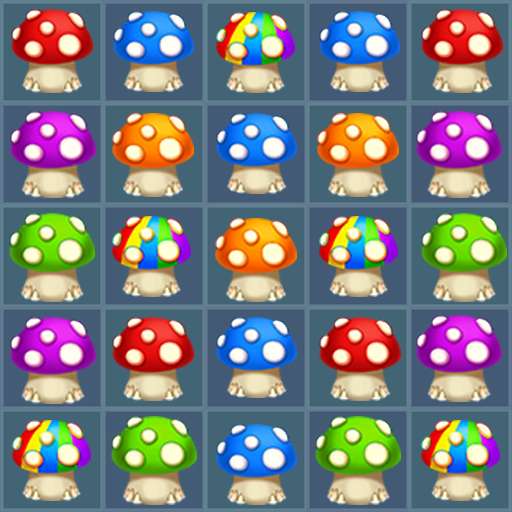
Match Craze: Colorful Mushroom Carnival
Game Introduction Step into a whimsical mushroom forest with Mushroom Match! This cozy match-3 puzzle adventure is all about simple, satisfying fun—swap adjacent fungi to line up three or more identical mushrooms, watch them pop in a burst of color, and clear the board. Nail each level’s unique objectives, from collecting rare glow-in-the-dark mushrooms to breaking through tricky obstacles, and unlock new, enchanting realms as you go. Let the cute, colorful vibes wrap you up—happy matching! Game Features 1. Easy-to-learn Core Gameplay with Low Entry BarrierBased on the classic match-3 mechanics, simply swap adjacent mushrooms to line up three or more identical ones and trigger eliminations. The controls are intuitive with zero learning curve—all actions can be completed with a single swipe. Both newbies and seasoned players can quickly get immersed in the fun. 2. Immersive Experience with a Whimsical Mushroom ThemeAdorable chibi-style mushroom designs paired with colorful visual elements, plus vibrant particle effects and crisp sound effects upon elimination, create a soothing and stress-relieving gaming atmosphere. The game is set in a magical mushroom forest, with new secret realms unlocking as you progress through levels to enhance the joy of exploration. 3. Diverse and Challenging Level DesignLevels feature differentiated objectives, including collecting specific rare mushrooms, clearing obstacles like ice blocks or vines, and scoring points within a time limit. The difficulty escalates gradually—early levels are relaxing and casual, while later stages introduce strategic elements, balancing the needs for relaxation and challenge. 4. Fun Power-Ups and Satisfying Chain Reaction ThrillsMatching four or five mushrooms in a row, or creating special alignments, generates powerful props such as area blasts, full-row clearance, and all-same-color elimination. Combining these props triggers spectacular chain reactions that clear large swathes of the board in an instant, delivering a strong sense of accomplishment and satisfaction. 5. Perfect for Short Leisure BreaksSingle-game sessions are time-efficient, requiring no long-term commitment—ideal for commutes, coffee breaks, or other short downtime. There’s no mandatory competitive pressure; you can retry failed levels instantly. With smooth, lag-free controls, you can enjoy casual matching fun anytime, anywhere. Gameplay and Controls Swipe to swap adjacent mushrooms, line up 3 or more identical ones to eliminate them. Complete each level’s objectives to move forward and explore more. Game Guide As a healing casual match-3 game, the core of Mushroom Match lies in efficient level clearing and rational use of power-ups, balancing relaxation, stress relief and strategy. Below is a complete guide for beginners to help you get started quickly, progress easily, and unlock all mushroom secret realms. Remember the basic operations and core principles: swipe adjacent mushrooms to line up three or more identical ones for elimination—that’s the foundation of clearing levels. Newbies should not swipe blindly at first; every move must balance "elimination efficiency" and "subsequent layout". Prioritize combinations that trigger chain reactions, such as eliminating mushrooms at the bottom. Using the natural fall of mushrooms above, you are likely to form new matching combinations and reduce step waste, which is also a key skill to improve level-clearing efficiency. Power-ups and special matches are powerful tools for passing levels; using them rationally can easily solve difficult levels. A straight match of four mushrooms generates a rocket power-up, which clears an entire row or column of mushrooms; a T-shaped or L-shaped match creates a bomb power-up, which eliminates mushrooms and obstacles within a 3×3 area; a match of five mushrooms unlocks a full-screen elimination power-up, suitable for emergency relief or sprinting goals. There’s no need to deliberately save power-ups—use them targeted when encountering obstacles like ice blocks, vines, or rocks. For example, use bombs to clear dense obstacles, rockets to break through one-sided blockades, and combining power-ups can trigger super chain effects for quick board clearing. Flexibly adjust your strategy according to the level; different level objectives correspond to different gameplay. For collection levels, prioritize eliminating the specified target mushrooms and ignore irrelevant matches to avoid wasting steps; for obstacle levels, first clear the obstacles at the bottom to open up elimination channels, then gradually clear the remaining obstacles to prevent them from spreading and increasing difficulty; for time-limited levels, prioritize forming special matches to generate power-ups, use power-ups to score quickly, and use consecutive eliminations to extend time bonuses. Advanced Tips: The duration of a single game is controllable, making it suitable for playing in fragmented time. You can retry immediately if you fail, so there’s no need to feel pressured. The difficulty of later levels increases gradually—reserve 1-2 steps for clearing remaining targets or obstacles at the end; when encountering a stagnant situation, prioritize eliminating edge mushrooms to reorganize the board layout. Remember the three core principles: "Prioritize the bottom, make good use of special effects, and be goal-oriented". You can not only enjoy the stress-relieving fun of elimination, but also easily unlock all fantasy mushroom areas and quickly improve your level-clearing ability.
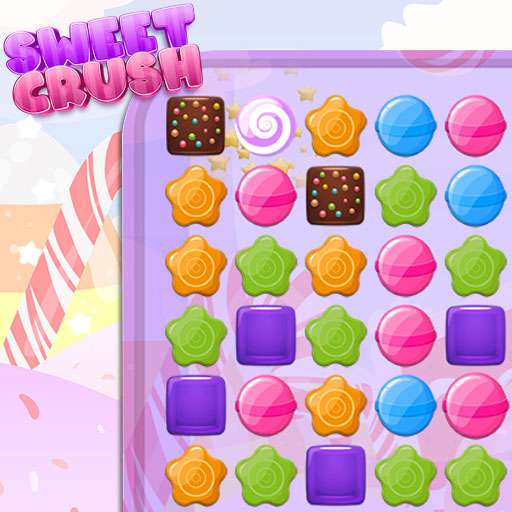
Crush Sweet Gems: Color Burst Puzzle Fun
Game Introduction Step into the colorful, candy-filled world of Sweet Crush — a charming match-3 puzzle journey you won’t want to put down! Here, the rules are simple: swap adjacent candies to line up three or more of the same type, watch them burst in a shower of sparkles, and rack up those points. As you breeze through levels, you’ll unlock awesome power-ups: some will sweep away whole rows of candies in one go, others will zap every candy of a single color off the board, and the most epic ones will trigger explosive blasts for game-changing combos! Challenge your pals to beat your high scores, climb the global leaderboards, and find out who’s the ultimate candy-crushing champion in this delightful, addictive puzzle game. Ready to make some sweet matches? Game Features 1. Low-Threshold Yet Strategic Match-3 Gameplay A simple swipe of your finger swaps adjacent candies—match three or more of the same type to trigger satisfying eliminations. Beneath the easy-to-grasp controls lies clever strategy; you’ll need to predict candy falling trajectories and plan combo sequences to break through obstacles like ice and chains within limited moves, balancing casual relaxation and brain-teasing puzzles perfectly. 2. Sweet & Soothing Immersive Sensory Experience Step into a vibrant candy-filled world, where cute gummy bears, silky chocolates, and colorful lollipops boast exquisite, eye-catching designs. Every elimination is paired with crisp popping sound effects and dazzling visual effects, complemented by light, soothing background music—turning each game session into a sweet, stress-relieving moment. 3. Cool Power-Up Combos for Maximum Satisfaction Match four candies to unlock striped power-ups that clear entire rows or columns in one go; line up five candies to summon rainbow candies that eliminate all candies of the same color across the board. Combine different special candies to trigger powerful effects like bomb blasts and large-scale clears, making light work of tough levels and rewarding you with a great sense of achievement through strategic combinations. 4. A Vast Array of Levels with Endless Fun Hundreds of carefully designed levels are updated regularly, each with unique objectives—collect specific candies, remove stubborn obstacles, or chase high scores against the clock. The difficulty progresses gradually, ranging from easy elimination levels for beginners to advanced puzzles that require careful planning, bringing new surprises with every challenge. Gameplay and Controls Swipe adjacent candies to swap their positions. Match 3 or more candies of the same type to eliminate them and earn points. Match 4 candies to get striped power-ups; match 5 to unlock rainbow candies. Combine special candies or use power-ups to clear obstacles and complete level goals. Game Guide As a casual and soothing match-3 game, Sweet Crush may seem simple to operate, but it actually hides many tips. Mastering the following guide will help you clear levels easily, get high scores, quickly grow from a novice to an elimination master, unlock more game fun, and balance casual experience with the sense of accomplishment from clearing levels. I. Core Tips for Basic Level Clearing The core of the game is matching and elimination. Mastering two key points first can help you avoid detours. First, prioritize eliminating candies at the bottom. The movement of candies at the bottom will drive the candies above to fall naturally, making it easier to trigger chain eliminations. It is much more efficient than blindly eliminating candies above and can also save moves. Second, focus on the level objectives. Each level has clear tasks, whether it is collecting specific candies or removing obstacles like ice and chains. You should always prioritize operations around the objectives to avoid wasting moves by indulging in score brushing, which may lead to failure in clearing the level. II. Guide to Efficient Use of Power-Ups Power-ups are the key to clearing levels, and using them reasonably can get twice the result with half the effort. Matching 4 candies of the same color can get you a striped power-up, which can clear an entire row or column of candies with one click, suitable for breaking through dense obstacles; matching 5 candies of the same color unlocks a rainbow candy, which can eliminate all candies of the same color on the board, suitable for quickly breaking the deadlock when the situation is complicated. Remember not to waste power-ups easily. Try not to use them in simple levels, but save them for difficult levels with tight moves and too many obstacles. Combining two special power-ups can trigger a large-scale blast effect and easily break through the bottleneck. III. High Score and Advanced Tips If you want to get high scores, focus on creating chain eliminations. Observe the candy layout, predict the falling trajectory of the candies above after elimination, and deliberately plan combo paths. The score of one chain elimination is much higher than that of a single elimination. When encountering stubborn obstacles, prioritize eliminating the candies around the obstacles. If the obstacle wraps a special candy, unlock the special candy first, then use it to remove the obstacle, which is more efficient. In addition, maintain a good attitude. When you get stuck on a level, you can pause to observe the whole situation to avoid blind operations; make good use of each move, and do not easily swap candies that cannot form a match to reduce invalid moves. Mastering these tips can not only help you clear levels easily, but also steadily improve your score. In the sweet candy world, enjoy the joy of every elimination and the sense of accomplishment from clearing levels.

Crash io Brawl: Blazing Knives Showdown
Game Introduction Dive into a high-octane io showdown where knives clash and legends are forged! This fast-paced arena lets you go head-to-head with players worldwide, testing your reflexes and tactical smarts in every heart-pounding match. Scavenge the battlefield for blades to expand your arsenal—each new knife adds bite to your attacks, turning quick throws into devastating barrages. Master the art of offense and defense in one smooth move: slice through incoming enemy knives to steal them mid-flight, or spin your growing blade circle to shield against brutal assaults. Outmaneuver rivals with swift dodges, corner foes in dynamic maps, and unleash a storm of knives to claim victory in the chaos. Every win fuels your rise: unlock rare, sharpened blade variants, boost your throw speed, and refine your strategies to outclass the competition. Whether you’re a casual player chasing quick thrills or a competitive master hunting the top spot, this knife-crashing showdown serves up nonstop action that keeps you coming back for more. Ready to clash, collect, and conquer? Step into the arena and become the ultimate knife io champion! Game Features 1. Real-Time Global Knife Battle Arena Engage in real-time cross-server battles with players worldwide, guaranteed smooth confrontations thanks to low-latency network optimization. Small-scale maps create frequent clashes; no complicated matching required—jump in and play instantly, and respawn right away after elimination to get back in the fight. 2. Offensive-Defensive Integrated Tactical Gameplay The core mechanic blends attack and defense seamlessly: slice incoming enemy knives to claim them as your own, and turn their own assaults against them. You need to precisely control your movement and throwing timing, dodge attacks through dynamic positioning, and seek out enemies’ weaknesses—all a test of your reflexes and tactical judgment. 3. Knife Collection & Progression System Various knives are scattered across the battlefield; the number of knives you collect directly boosts your attack range and damage, quickly turning you into a dominant force on the field. Unlock rare sharpened knife variants with different stat bonuses, create your unique combat style, and amp up the fun of collecting and character progression. 4. Fast-Paced & Easy-to-Pick-Up Experience Intuitive and straightforward controls—master the core gameplay of throwing and dodging without tedious tutorials, perfect for both casual and hardcore players. Short match durations: experience a complete competitive round in just 3 minutes, making it ideal for enjoying thrilling battles in your spare moments. 5. Dynamic Battlefield Interaction Terrain features influence the battle situation: use environmental cover to hold your ground and launch counterattacks, or flank enemies from behind with clever positioning. Authentic combat physics feedback—realistic knife collisions and flight trajectories deliver an immersive strike feel, amplifying the thrill of competition. Gameplay and Controls Press and hold the screen: Move your character, dodge enemy attacks and collect knives on the battlefield Tap the screen: Throw knives, attack opponents and compete for an advantage Release your finger: Enter defense mode, slash incoming enemy knives and collect them Core goal: Collect knives to enhance combat power and survive until the end to become the winner Game Guide Knives Crash io is a fast-paced competitive arena game where survival and strategic knife collection are the keys to victory. This guide helps both new and intermediate players master core skills, avoid common pitfalls, and boost their winning rate, all within practical and easy-to-follow tips. In the early game, your top priority is efficient knife collection, not hasty attacks. When the match starts, press and hold the screen to move your character to areas with scattered knives—avoid crowded zones with multiple opponents to prevent early elimination. Each collected knife directly increases your attack range and damage, which is crucial for later battles. If you encounter an opponent with fewer knives, tap the screen to throw knives and take them down, then collect their blades to speed up your growth. Always stay alert: release your finger immediately if an enemy throws knives at you to enter defense mode, slash their blades, and add them to your arsenal. The mid-game focuses on balancing offense and defense, as most players will have a basic set of knives. Master the switch between attack and defense: when facing an opponent with similar strength, don’t fight head-on. Instead, use swift movements to dodge their throws, then counterattack by tapping the screen continuously to launch a knife barrage. Use terrain cover wisely—hide behind obstacles to avoid being targeted, and flank opponents from the side to catch them off guard. Remember, defense is as important as attack: releasing your finger to block incoming knives not only protects you but also helps you steal blades, turning your rival’s advantage into yours. In the late game, the battlefield shrinks, and conflicts become more intense. By this time, you should have a large number of knives and strong combat power. Avoid unnecessary battles; instead, let other opponents eliminate each other first, then clean up the remaining one. If you’re at a disadvantage, use defense mode to block attacks and collect knives to recover, then counterattack when you have the upper hand. Don’t overcommit to attacks—preserve your position and wait for the right moment to strike. Finally, practice makes perfect. Hone your throwing accuracy and movement speed, and avoid rushing into battles blindly. Stick to these tips: collect knives efficiently, master offensive-defensive switches, and use strategies wisely. Soon, you’ll survive until the end and become the ultimate knife master in Knives Crash io.

Clash io Archers: Real Time Bow Showdowns
Game Introduction Tense up your nerves and settle the score in an instant! In this thrilling multiplayer io battle game, reflexes and quick decision-making are your trump cards to the top—they will not only propel you to the leaderboard peak, but also expand the size of your archer army. Lead your warriors to charge across the battlefield, mow down all rivals, and rise to become the undefeated battlefield commander! Game Features 1. Real-time Multiplayer io Battles Match against players worldwide in real time and engage in intense archer army showdowns with thousands of competitors on the same screen, satisfying the demand for instant head-to-head action. 2. Army Development Gameplay Start with a single archer, expand your troop size by recruiting neutral units and defeating rivals. Your army’s combat power grows alongside its numbers, delivering a strong sense of accomplishment. 3. Balanced Focus on Strategy and Operation Precisely control your troops’ movement, master shooting angles, make the most of terrain advantages to surround enemies, and adjust your expansion or defense strategies according to battlefield dynamics. 4. Fast-paced Fragmented Gameplay Experience Each match lasts only around 1 minute. Jump right into the action and get an instant respawn after defeat—no long time commitment required, perfect for entertainment in short pockets of free time. 5. Random Skill System Unlock 3 random skills at the start of each match and mix and match them freely. Smart use of skills can turn the tide of battle, making every game full of variables and avoiding repetitive routines. 6. Lightweight and Easy-to-learn Controls Complete core actions like moving and attacking simply by sliding the screen. No complicated tutorials to go through—both casual and hardcore players can quickly get immersed in the game. 7. Diverse Arena Experience A variety of map scenarios offer distinct tactical spaces, ranging from open arenas to narrow terrain. Every battle requires flexible adaptation to the environment. 8. Offline and Online Dual Modes Support for both online real-time battles and offline single-player gameplay. Enjoy competitive fun anytime, anywhere, without being restricted by network conditions. Gameplay and Controls 1. Slide/tap the screen to control your archer army’s movement. 2. Aim at rivals to shoot automatically; double-tap for powerful shots. 3. Recruit neutral archers by moving close to them to expand your army. 4. Tap to select random skills when leveling up. 5. Tap to respawn immediately after being defeated. Game Guide As a fast-paced multiplayer io competitive game, the core of Archers.io is to climb to the top in 1-minute single matches by expanding your archer army and using strategies flexibly. This guide focuses on helping new players get started quickly, covering key skills for the early, mid, and late game stages, to help you easily become the strongest battlefield commander and improve your winning rate efficiently. I. Early Game Development: Steady Progress, Rapid Army Expansion At the start, you only have 1 archer. Your core goal at this time is to expand your team quickly and avoid rushing into battles. Slide the screen to control your movement, prioritize approaching the white neutral archers in the scene, and move close to them to recruit them—this is the key way to expand your army in the early stage. Avoid large enemy player legions in your field of vision; if you encounter isolated opponents (fewer than 5 people), you can try to chase and eliminate them slightly to absorb their fallen troops. Try to expand your team to more than 10 archers within the first 10 seconds to lay the foundation for mid-game battles. II. Mid Game Battles: Strategy First, Make Good Use of Terrain When your team size reaches 15-20 archers, you can take the initiative to start battles, but you need to pay attention to tactics. Make good use of terrain advantages, lure enemies into narrow areas to encircle and annihilate them, restrict their movement, and improve shooting accuracy. Slide the screen to adjust your legion’s position flexibly, avoid staying still and becoming an easy target, and use the automatic shooting function to continuously attack opponents. Double-tap to release a powerful shot and quickly break through the enemy’s front line. When leveling up, you will randomly unlock 3 skills. Prioritize choosing skills that increase damage, speed up shooting rate, or have area attacks. Reasonable matching can turn the tide of the battle. After defeating opponents, immediately absorb their remaining archers to replenish troops in a timely manner, maintain the advantage of your team size, and avoid being ambushed by other players due to insufficient troops. III. Late Game Decisive Battle: Assess the Situation, Climb to the Top The last 30 seconds of a single match are crucial for victory, and you need to accurately assess the overall situation of the field. If you have an advantage in troop numbers, you can hold a favorable terrain, intercept scattered opponents, and steadily widen the gap; if you are at a disadvantage in troops, do not fight head-on. Focus on chasing small isolated teams, quickly replenish troops, and wait for opponents to consume each other before reaping the benefits. No need to wait after being defeated—click to respawn immediately, return to the battlefield quickly, and use the remaining time to recruit troops again and find opportunities. In the late game, try to keep your team concentrated, avoid being defeated one by one due to scattered troops, focus your fire on the enemy’s main force, gradually erode the opponent, and finally climb to the top to become the strongest battlefield commander. Core Summary: Do not rush to expand your army in the early game, focus on strategy in mid-game battles, and know how to choose in late-game decisive battles. With flexible movement + reasonable use of skills, you can steadily gain points in fast-paced battles and easily master the essence of the game.

Egg Joy Unravel: Delightful Layer Peeling Puzzles
Game Introduction Dive into The Eggs Unravel—where sleek minimalism meets brain-teasing logic in this addictive HTML5 puzzle game! Your quest? Untangle eggs woven together by delicate threads across 50 carefully crafted levels. With intuitive drag-and-drop controls, reposition each egg until both the eggs and their connecting lines glow green—no crossings allowed. This isn’t just a puzzle—it’s a calming brain workout that blends logical deduction with satisfying order . Start with gentle challenges and level up as the tangles grow trickier, testing your spatial reasoning and focus with every step. The clean, clutter-free design keeps the focus on the joy of unraveling, turning chaos into harmony with each successful solve . Ready to flex your problem-solving skills and conquer all 50 levels? Let the unraveling begin—can you turn every tangled mess into a picture of perfect calm? Game Features 1. Minimalist Visual Aesthetics Adopt a clean and uncluttered interface design, with a minimalist style that focuses on the puzzle-solving experience itself. No redundant elements to distract you, allowing players to fully immerse themselves in strategic thinking. 2. Intuitive Zero-Barrier Controls Support simple one-finger drag-and-drop operations to move the eggs. No complicated learning curve required, compatible with mobile phones, tablets and other devices—pick up and play instantly. 3. 50 Progressive Levels Handcrafted level system ranging from beginner-friendly to advanced challenges, with gradually increasing difficulty. It’s easy for new players to adapt, while also providing constant mental stimulation for veteran puzzle lovers. 4. Clear Logical Puzzle Core With a straightforward goal—turn both the eggs and their connecting lines green without any crossings—the rules are simple to understand, yet packed with the fun of spatial path planning that keeps you hooked. 5. Therapeutic Stress-Relief Experience Slow-paced gameplay paired with instant visual feedback as lines turn green. Every successful untangling brings a strong sense of accomplishment, making it perfect for unwinding during fragmented downtime. 6. Brain-Training Value Naturally enhance your spatial logical reasoning and path-planning skills while solving puzzles. It combines entertainment with mental exercise, letting you sharpen your mind as you play. Gameplay and Controls 1. Basic Operation: Long-press and drag the eggs to freely adjust their positions on the screen. 2. Core Objective: Turn all eggs and their connecting lines completely green. 3. Critical Rule: Ensure that the connecting lines between eggs **do not cross** during adjustment. 4. Level Progression: Unlock the next puzzle level once all the above conditions are satisfied. Game Guide Unravel Egg features a minimalist art style combined with a core of logical puzzle-solving. With 50 progressive levels ranging from easy to difficult, the main goal is to drag the eggs to turn all eggs and their connecting lines completely green without any crossings, thus unlocking levels smoothly. This guide focuses on practical tips to help you avoid beginner mistakes, clear levels efficiently, and balance a stress-relieving experience with thinking efficiency. Beginner Basics: First, observe the overall layout and do not drag eggs blindly. Quickly browse the direction of the connecting lines of all eggs, remember the core rule of "no crossing lines, all turning green", and get familiar with the smooth feel of one-finger dragging — drag gently to adjust the position of the eggs accurately, avoiding more serious line tangles caused by excessive dragging. New players can start with the edge eggs to quickly adapt to the operation rhythm. Core Tips: Follow the principle of "start with the edges, then the middle; start with the simple, then the complex". Edge eggs have fewer connecting lines and are less likely to cross with other lines. Prioritize dragging the edge eggs to appropriate positions to turn them green. After fixing the basic lines, adjust the tangled eggs in the middle to reduce ineffective operations. When encountering multiple tangled eggs, you can sort them into groups, straighten out one group of connecting lines first, then handle the other group, and resolve the tangles step by step. Advanced Strategies: As the difficulty of the levels increases and the lines become more tangled, you can use reverse reasoning. First, imagine the final state where all lines are green and non-crossing in your mind, then adjust the position of each egg in reverse to accurately avoid crossing risks. If line crossings occur, do not panic. First, gently drag the eggs at the crossing to a blank area, untangle them, and then re-plan their positions to avoid more crossings caused by forced dragging. Pitfall Avoidance: Do not rush for quick results; slow adjustment is more efficient. A common mistake for beginners is "frequent dragging and blind attempts", which only makes the lines more chaotic. It is recommended to pause and observe the changes of the connecting lines after dragging each egg, and proceed to the next step only after confirming there are no crossings. When stuck, you can reset all eggs, sort out the layout again, and try a different approach, which can often help you break through the bottleneck quickly. By following the above tips, you can easily cope with the 50 progressive levels, enjoy the sense of accomplishment of gradually straightening the lines and turning all eggs green, exercise your spatial logical reasoning ability while relieving stress, and easily unlock all the fun of the game.

Trick Flip Roblox: Sleek Aerial Maneuvers
Game Introduction Ready to unleash your inner floppy ragdoll in the wild world of Roblox? Flip, bounce, and zoom through a zany household adventure where the only golden rule is—don’t touch the floor! Dodge wacky obstacles as you zip from room to room, soaring toward the bedroom finish line with over-the-top ragdoll physics that’ll have you laughing out loud. Snag cash and sparkly diamonds along the way to unlock quirky new characters, each with their own silly flip styles that spice up every run. Whether you’re nailing precision jumps to glide past tricky traps or embracing chaotic tumbles that send you bouncing off the couch, every moment is packed with lighthearted fun. No fancy skills required—just pure, unadulterated flip-and-bounce vibes for players of all ages! Game Features 1. Exaggerated Ragdoll Physics Mechanic The character takes on a cute floppy ragdoll form, delivering realistic yet hilarious physical feedback when flipping, bouncing, and colliding—for a stress-relieving and addictive gaming experience. 2. Zero-Barrier Fun Level-Based Challenges Control flips with simple one-finger taps, following the straightforward rule: dodge obstacles like furniture, never touch the floor, and dash all the way toward the bedroom finish line. No complex tutorials needed—jump right in and play. 3. Immersive Indoor Household Scenarios Set in a virtual home environment, the level paths from living room to bedroom are rooted in everyday life, bringing a strong sense of immersion to the gameplay. 4. Collectible Unlock Progression System Gather cash and diamonds as you play through levels to unlock a variety of distinct characters, each with exclusive traits that add extra diversity to your gaming sessions. 5. High Replayability with Multiple Levels Features 20 well-crafted levels with gradually increasing difficulty. Whether you aim for precision-based clears or go for silly chaotic collisions, every playthrough offers a fresh and fun experience. 6. All-Age Friendly Gameplay No intense control demands or complicated rule sets—this game caters to kids’ sense of adventure and serves as a perfect stress-buster for adults looking to unwind in their spare time. Gameplay and Controls 1. Tap to control the character to flip and bounce. 2. Dodge indoor obstacles and never touch the floor. 3. Collect cash and diamonds, unlock new characters, and rush to the bedroom finish line. Game Guide This operation guide is designed to help players quickly master the core gameplay of Roblox Flip, with simple tap controls that fit all ages. The game features a playful ragdoll character navigating a virtual household, where your goal is to flip, bounce, and reach the bedroom safely while avoiding obstacles and collecting rewards. All operations rely solely on tapping, with no complex controls, allowing you to jump into the fun instantly. Basic Operations The entire game is controlled by simple taps, adapting to both mobile and desktop touch controls. A short tap on the screen will make your ragdoll character perform a light flip—ideal for short-distance movement, such as moving from a chair to a cabinet. A long press will trigger a powerful flip, enabling the character to jump over higher obstacles like sofas or tables, with realistic ragdoll physics making the flip look natural and funny as the character swings in the air. Continuous quick taps allow for consecutive flips, helping you cover more distance quickly and pass open areas efficiently. Advanced Skills & Level Strategies As you progress through the 20 well-crafted levels, the difficulty gradually increases, requiring more precise operation timing. When encountering dense obstacles (such as stacked furniture), use short taps to adjust your flip angle slightly, keeping the character close to the obstacle edges to avoid collisions. For high platforms, use a long press to flip upward, then a short tap mid-air to stabilize the character’s posture and land safely. Cash and diamonds are scattered throughout the levels—you don’t need extra operations to collect them; just let the character touch them while flipping, but prioritize avoiding the floor over collecting rewards to ensure level completion.

Rush Elevator Fall: Thrilling Drop Showdown
Game Introduction A race-against-time escape challenge! Leap for your life from the elevator that zooms up and down at breakneck speed, dodge incoming deadly obstacles with pinpoint precision, and shake off the relentless police pursuit. Every jump you make is a matter of life and death — only with lightning-fast reflexes and agile movements can you defuse the crisis and accomplish the ultimate mission of stopping the elevator’s catastrophic explosion! Game Features 1. Dynamic Elevator Escape Gameplay The core gameplay revolves around the *moving elevator that shifts up and down*. Players must time their jumps precisely with the elevator’s start-stop rhythm, breaking the constraints of static scenarios. Every rise and fall brims with unpredictability and challenge, delivering intuitive and thrilling controls. 2. Layered Crisis Challenges Face three deadly threats at once: randomly spawning moving obstacles, relentless police manhunts, and the ticking time-bomb of the elevator explosion. Overlapping pressures keep the tension sky-high throughout, testing both your reflexes and decision-making skills. 3. Fast-Paced Immersive Experience Dive straight into the escape action with no lengthy plot exposition. Paired with heart-pounding sound effects and dynamic lighting, it creates a pulse-racing, life-or-death atmosphere. You can experience the full thrill from intense tension to victory in short bursts, perfect for fragmented gaming sessions. 4. Progressive Difficulty Curve As you advance through levels, the elevator’s movement speed, obstacle density, and police pursuit intensity ramp up gradually. From easy pick-up-and-play fun for beginners to ultimate challenges for hardcore players, gamers of all skill levels can find their perfect dose of excitement, keeping the gameplay endlessly engaging. Gameplay and Controls 1. Keep track of the elevator’s up-and-down movement rhythm and spot the optimal jump timing. 2. Tap the screen to control your character and jump off the elevator to escape. 3. Nimbly dodge various randomly appearing obstacles along the way. 4. Adjust your movement direction to shake off the relentless police blockade. 5. Complete the level objectives and prevent the elevator from exploding to clear the stage. Game Guide 1. Master Core Controls: Timing Your Jumps is Key The core of the game lies in “escaping by leveraging the elevator’s rise and fall” — mastering precise jump timing is the foundation of clearing levels. Jump 0.5 seconds before the elevator reaches its highest point to gain maximum airtime, easily crossing wide gaps between obstacles. For the descending phase, jump in advance to use gravitational acceleration and shorten your landing time, preventing yourself from being thrown off course by the elevator’s downward momentum. New players are advised to practice predictive jumping in low-difficulty levels first, focusing solely on rhythm instead of scores. Once muscle memory kicks in, you can start chasing high scores. 2. Obstacle Evasion Strategies: Targeted Solutions for Calm Navigation Tackle obstacles based on their types for efficient avoidance: For stationary obstacles (such as walls and pipes), observe their spawn patterns and adjust your jump direction ahead of time. For moving obstacles (like floating barriers and rotating gears), keep a close eye on their trajectories and squeeze through gaps — never jump blindly. When facing dense clusters of obstacles, use a combination of short hops and micro-adjustments. Tap the screen lightly for short-distance jumps to avoid losing control of your landing spot due to overly large leaps. Remember the mantra “better slow than reckless”: some levels allow you to wait briefly for obstacle gaps instead of forcing a risky rush. 3. Police Pursuit Countermeasures: Positioning Trumps Speed Police will block your path along fixed routes, and the core strategy to evade them is displacement maneuvering. As soon as the police badge icon appears on the edge of the screen, immediately change your jump direction. Use the height difference created by the elevator’s up-and-down movement to shake off the pursuit. If trapped between front and rear pursuers, prioritize jumping in the direction the elevator is moving, using its speed to create distance. Note that police chases have a cooldown period — after evading them, you can briefly speed up to collect items instead of staying on the defensive indefinitely. 4. Time & Item Management: Master the Explosion Countdown The explosion countdown is the ultimate pressure source. Push forward quickly in the first half of the level, and focus solely on avoiding dangers in the final 10 seconds. Be sure to grab time extension items that spawn randomly throughout the level — they grant an extra 3–5 seconds of buffer time. Save shield items for critical moments, such as dense obstacle sections or police blockades, as they grant immunity to one collision damage. Avoid taking risks to collect items; in most cases, surviving until the end is more important than item collection. 5. Advanced Clearance Tips: From Survival to Mastery Once you’re proficient, try linking jumps together — tap the screen again the moment you land to trigger a double jump, perfect for handling sudden obstacles. For high-difficulty levels, we recommend pattern memorization: memorize the spawn positions of obstacles and police, then plan your route in advance. Mindset is crucial — don’t panic after a mistake. Use the brief invincibility period after respawning to quickly readjust your rhythm. Clearing three consecutive levels will unlock the Speed Escape achievement.
