


















The Core Concept: Sliding Arrows Off the Board
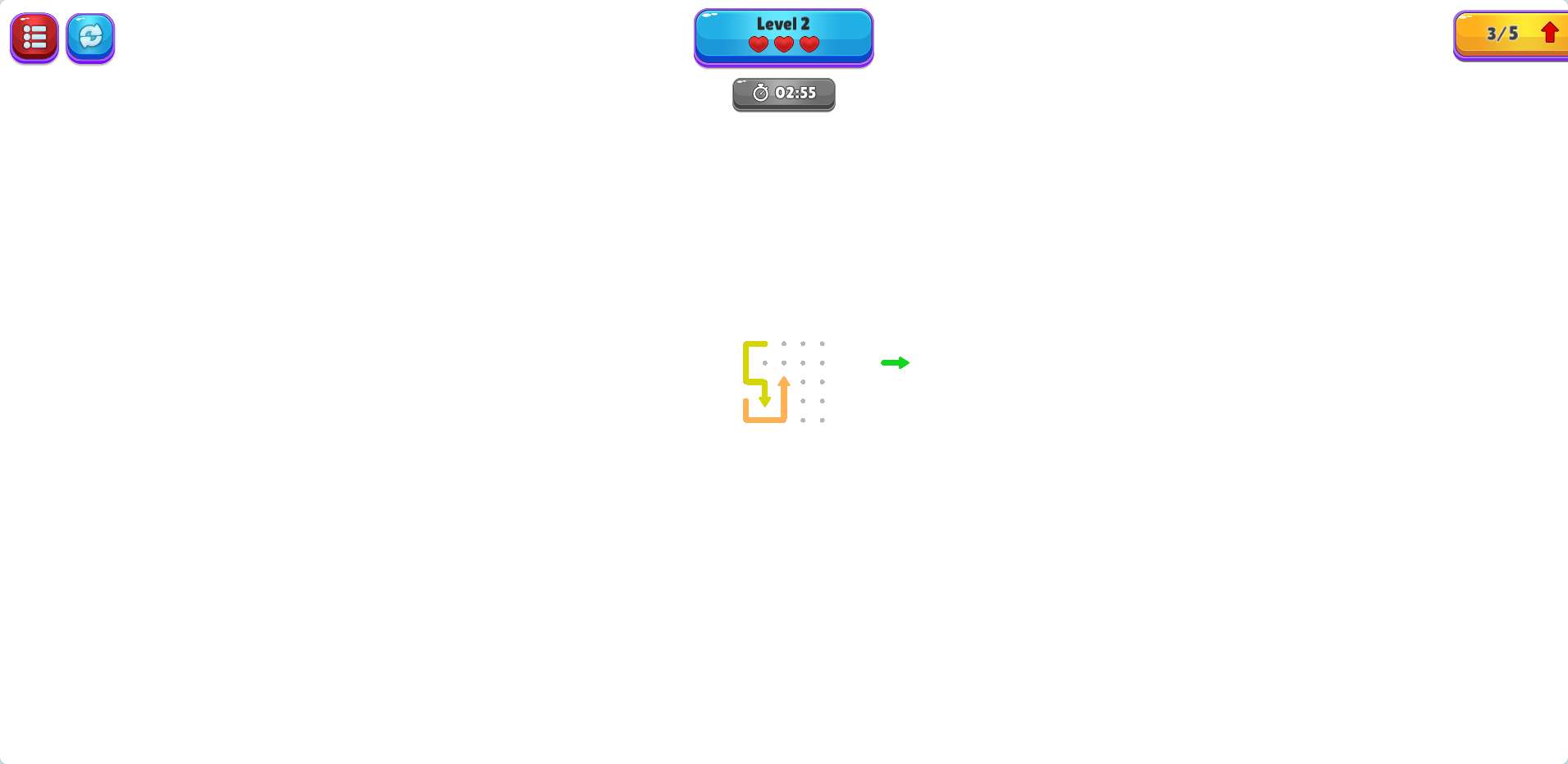
Arrow Out presents a grid filled with arrows pointing in different directions. Your only task is to click them in the correct sequence so each one slides off the playing field. It sounds simple, and at first, it is. The early levels act as a gentle tutorial, introducing the basic rule: an arrow can only move in the direction it's pointing, and it can only exit if its path to the edge is clear.
This creates an immediate spatial logic puzzle. You can't just click willy-nilly. If an arrow pointing right is blocked by another arrow below it pointing up, you have to solve the blocker first. The game quickly establishes a language of dependencies that your brain has to map out.
Gameplay Feel and Pacing
The interaction is minimal—just mouse clicks—which matches the game's clean, uncluttered aesthetic. There’s no timer, no score, and no star ratings. The satisfaction comes purely from figuring out the sequence and watching the board clear itself with smooth, satisfying slides. This lack of pressure is its greatest strength for a certain type of player. It’s a game you can play while thinking about something else, or when you want to engage a logical part of your brain without adrenaline.
However, the pacing can feel a bit flat. Since the challenge is almost entirely cognitive, and the presentation is so consistent, levels can start to blend together after a while. The game introduces new mechanics sparingly, like arrows that change direction or special tiles, but the core loop of ‘find the correct first click’ remains unchanged.

Where Arrow Out Shines and Where It Falters
This is a game that knows its niche. It excels as a polished, browser-based time-passer for puzzle purists who enjoy untangling a static problem. The logic is sound, and there’s a genuine ‘aha’ moment in many levels when you spot the key arrow that unlocks the entire board. It’s the digital equivalent of a well-made logic puzzle from a newspaper.
Yet, that same purity is its limitation. There’s little sense of progression or variation in tone. The visuals and sound are functional but forgettable, doing little to elevate the experience beyond the mechanics. For players who need thematic wrapping, rewards, or a evolving challenge curve, Arrow Out might feel too lean. It’s a snack, not a meal.

Final Thoughts: Who Is This For?
Arrow Out doesn’t try to be everything to everyone, and that’s commendable. It’s a solid recommendation for someone who wants a no-fuss logic exercise—perfect for a short break or to wind down. It respects your intelligence and doesn’t waste your time with fluff.
But if you need narrative, high stakes, or explosive feedback from your puzzles, you’ll likely find it too quiet and repetitive. Its value hinges entirely on whether you enjoy the specific pleasure of decoding orderly sequences. As a free browser game, it delivers exactly what it promises: a clean grid, a clear rule set, and a series of tidy problems to solve.